Curated by Apsáalooke artist Wendy Red Star, Native America: In Translation features nine Native American and First Nations artists working in photography and other lens-based media. On view at the Blanton Museum of Art at the University of Texas at Austin, Texas, through January 5, 2025, the 60 artworks on display offer contemporary Indigenous perspectives on identity, memory, tradition and the history of photography.
Hannah Klemm, the managing curator of the Blanton’s presentation of the touring exhibition, says, “Each artist in the exhibition has an individual approach to these themes, artists are using photography, installation, sculpture and modes of performance to reverse the common record of the vanishing or erasure of Native people. Instead the artists in this show counter with narratives of reclamation, proclaiming an indigenous past, present, and future.”
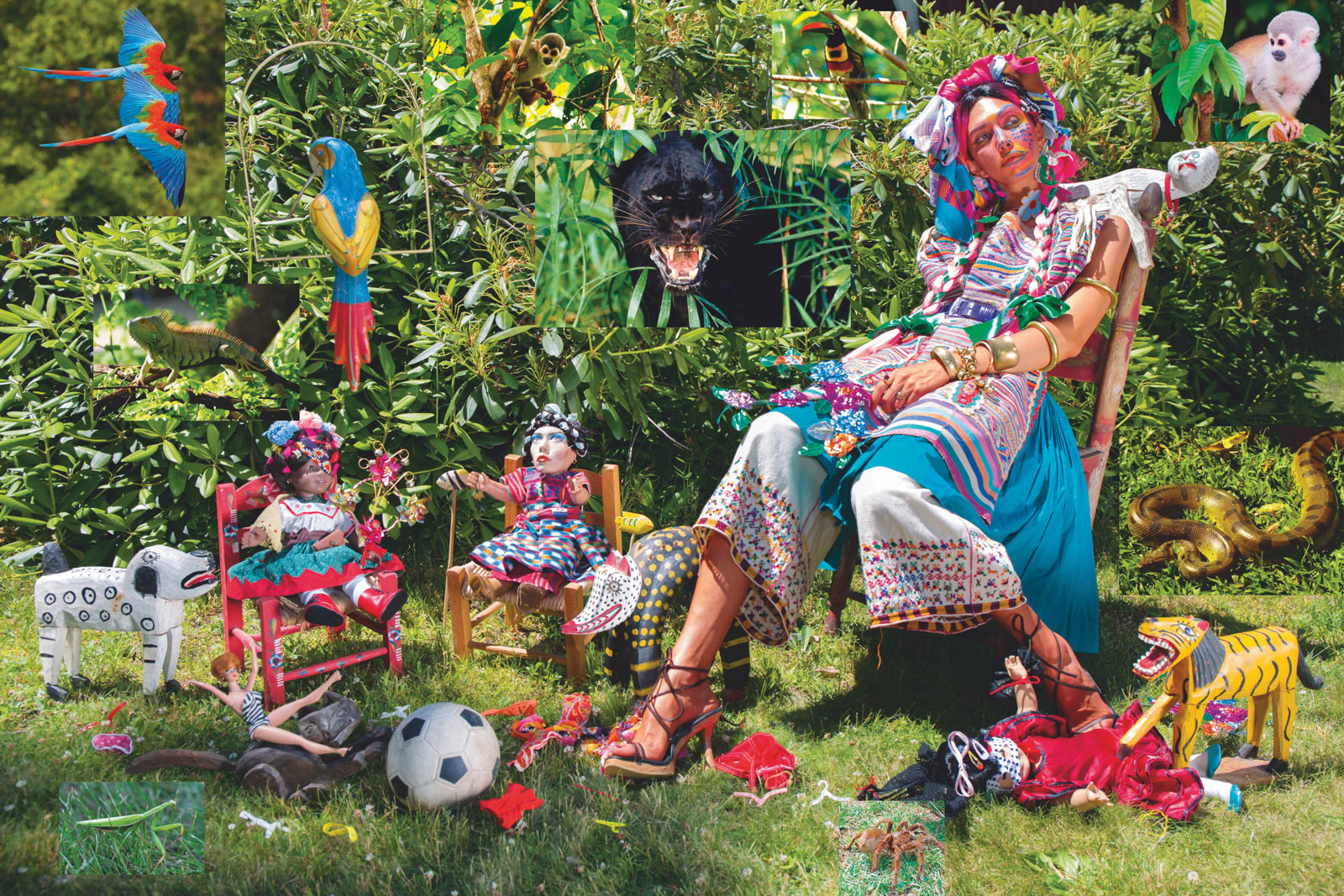 Martine Gutierrez, Queer Rage, Imagine Life-Size, and I’m Tyra, from the series Indigenous Woman, 2018, digital C print, 28 x 42”. Courtesy of the artist and RYAN LEE Gallery, New York.
While the exhibition presents a sweeping range of works, there are several that are emblematic of the show as a whole, including Cold Lake Fishing by the late Cree artist Kimowan Metchewais (1963-2011). Based on a photograph taken by his mother of him and his cousin in a sacred place, Klemm says, “Metchewais’ unique photographic collage works illustrate a beautiful relationship between public person and private life—by taking intimate moments of being a Native person and bringing them into the public with a beautiful honesty, truth, and intimacy that claims space and agency. It is a portrait of home, family, and memory.” She notes the Cree language on the image and that the photographs were dipped in tobacco which is sacred to his community. “Metchewais’ work finds the profound in the simplicity of everyday life, with his own health battles with brain tumors (which finally took his life in 2011) and his Native upbringing his work beautifully claims living as a radical act.”
Another highlight of the show is Rebecca Belmore’s (Lac Seul First Nation), matriarch, from the series nindinawemaganidog (all of my relations). “Belmore is one of the most important feminist performance artists of the last 30 to 40 years,” says Klemm. “Her work brings visibility to issues of labor, climate change and social injustice. This series of works is so interesting because in them she went back and restaged parts of her seminal performances with her sister and then she had them photographed…The performance drew attention to unseen indigenous and female labor, and the water contamination and resource allocation as it pertains to the impending climate crisis.”
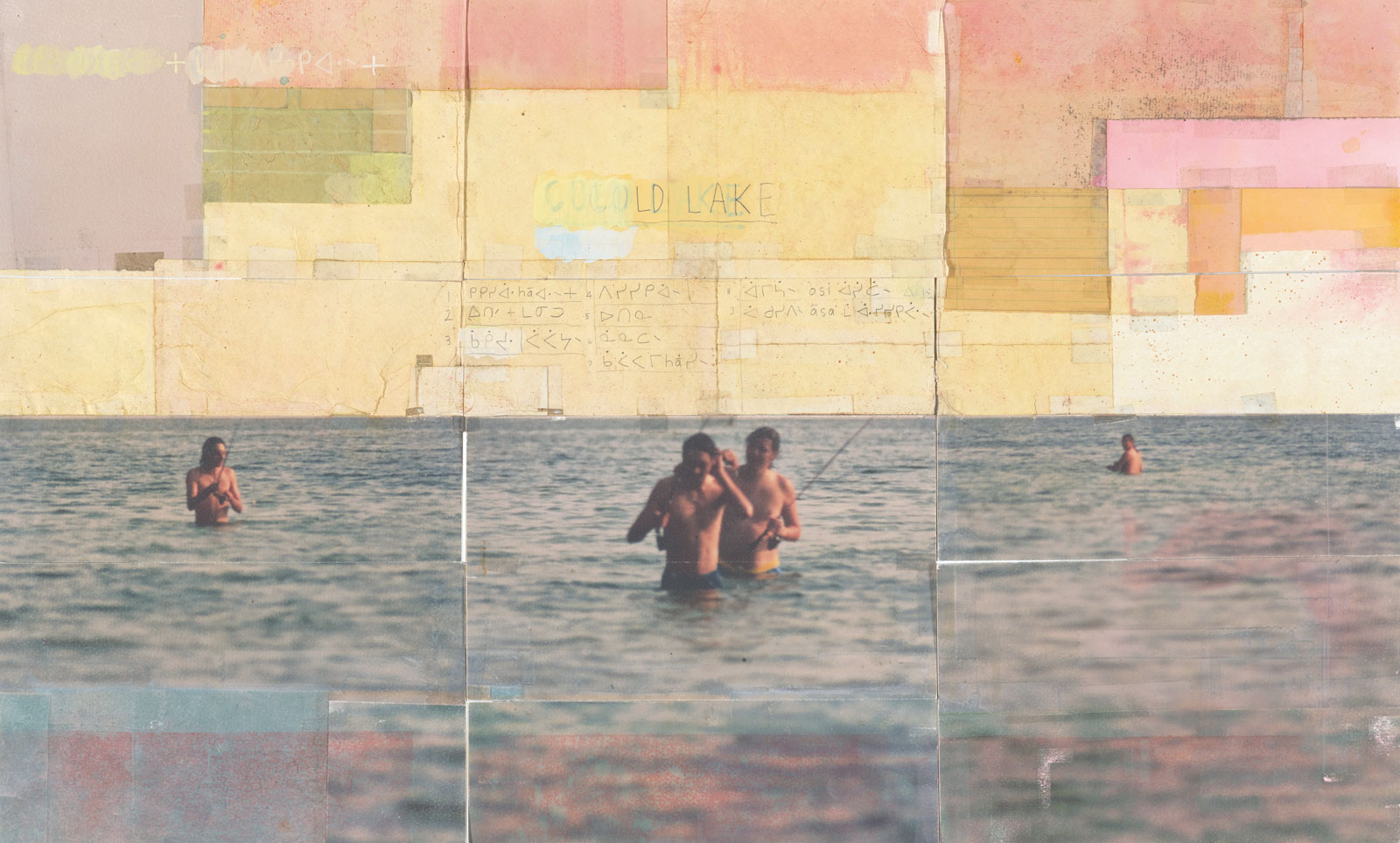 Kimowan Metchewais (Cree, 1963-2011), Cold Lake Fishing, paper, ink, adhesive tape, graphite and acrylic paint, 18 x 29¾”. Courtesy National Museum of the American Indian Archives Center, Smithsonian.
American with Mayan heritage, Martine Gutierrez’s Queer Rage from the series Indigenous Woman, 2018, uses humor and satire to critique dominant forms of mainstream culture, while carving out a place for herself, trying on fluid identities that touch on race, class, gender and sexuality.
For Klemm, Marianne Nicholson’s Widzotłants gwayułalatł? Where Are We Going...What Is to Become of Us? illustrates all the elements of the show. She explains, “It’s about the legacies of photography, resilience, and Native communities maintaining traditions but Nicholson brings everything into the present moment where we learn these unseen histories and reflect on them through an immersive aesthetic experience. She beautifully upholds ancestral philosophy of her community and their worldview, yet she does it through a very contemporary medium—using light, photography and glass.”
The exhibition also features lens-based artworks by Nalikutaar Jacqueline Cleveland (Yup’ik), Koyoltzintli (Ecuadorian-American), Guadalupe Maravilla, an American artist born in El Salvador, Duane Linklater (Omaskêko Ininiwak from Moose Cree First Nation), and Alan Michelson (Mohawk, Six Nations of the Grand River).
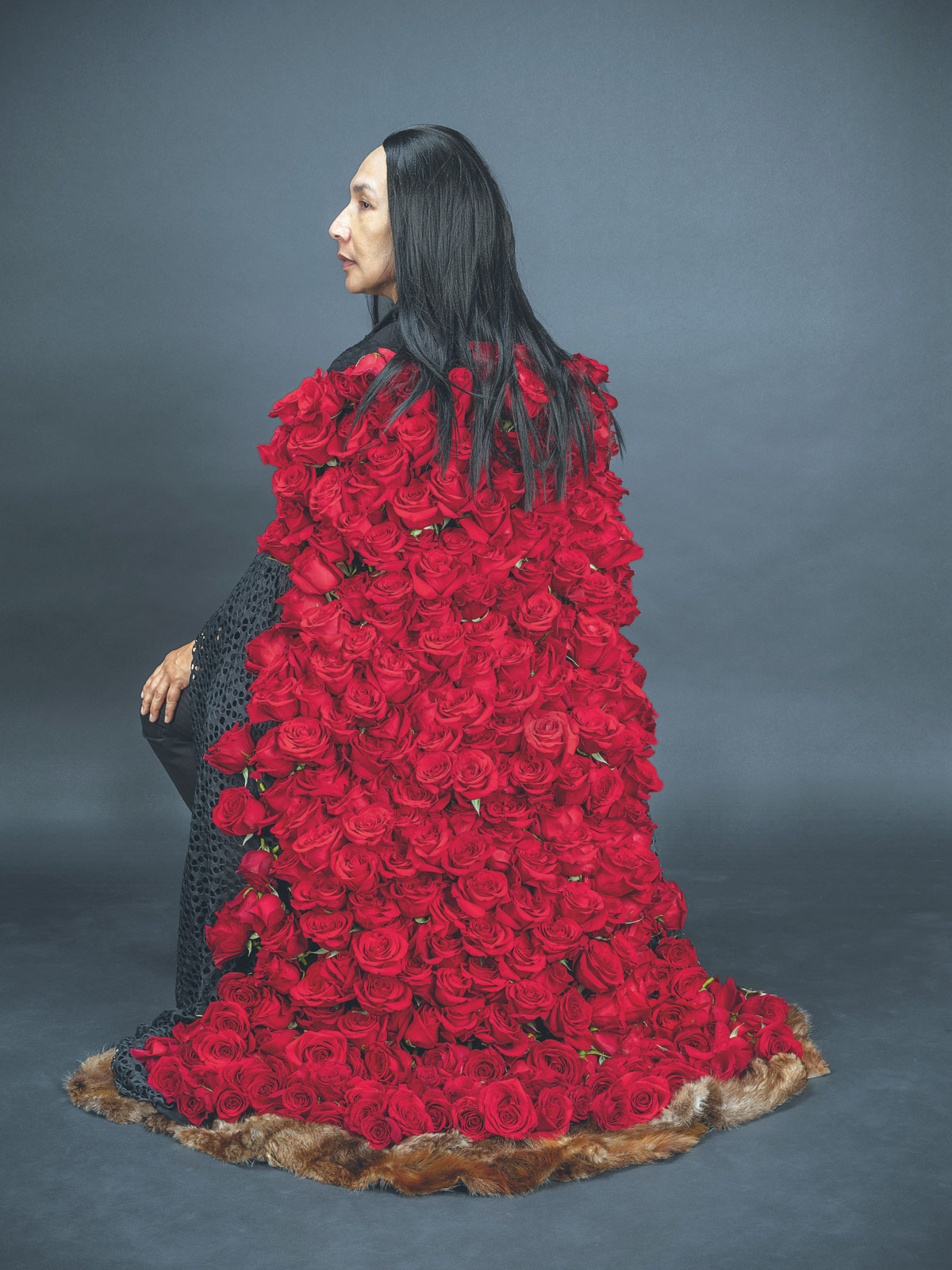 Rebecca Belmore (Lac Seul First Nation), matriarch, from the series nindinawemaganidog (all of my relations), 2018, framed archival pigment print, 56 x 42”. Courtesy of the artist.
In putting together the exhibition, Red Star shares, “I was thinking about young Native artists and what would be inspirational and important for them as a road map. The people included here have all played an important part in forging pathways, in opening up space in the art world for new ways of seeing and thinking.”
After travelling to five institutions in the United States since its tour began in 2022, the Blanton will be the exhibition’s first and only stop in the Southwest.
Through January 5, 2025
Native America: In Translation
The Blanton Museum of Art at the University of Texas at Austin
200 E. Martin Luther King Jr. Boulevard, Austin, TX 78712
(512) 471-5482, www.blantonmuseum.org
Powered by Froala Editor


